

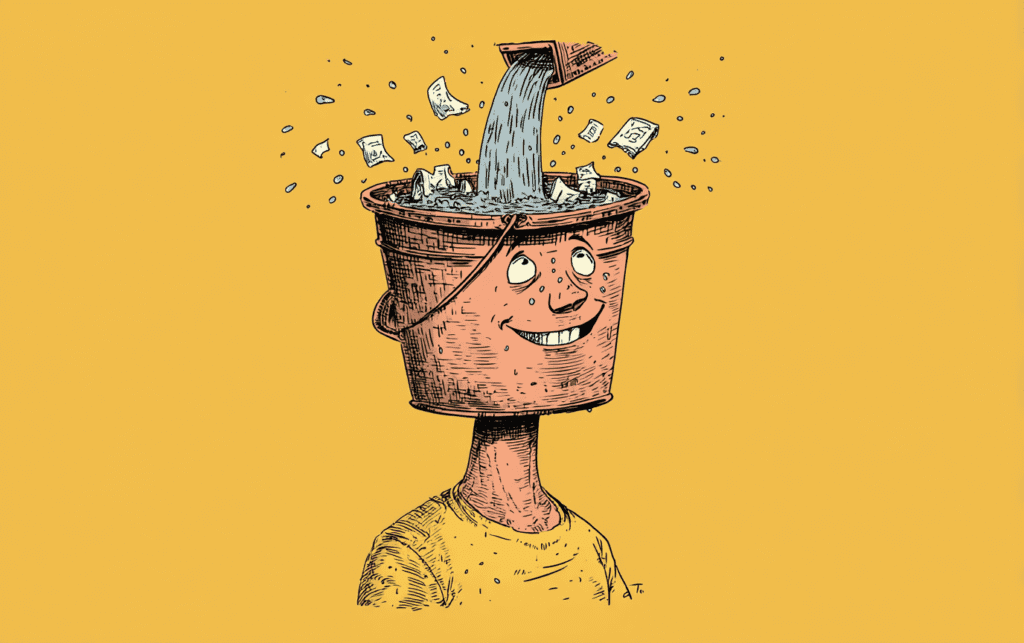
belief /bĭ-lēf′/
nounThe mental act, condition, or habit of placing trust or confidence in another. "My belief in you is as strong as ever."
Mental acceptance of and conviction in the truth, actuality, or validity of something. "His explanation of what happened defies belief."
Something believed or accepted as true, especially a particular tenet or a body of tenets accepted by a group of persons.
Assent to a proposition or affirmation, or the acceptance of a fact, opinion, or assertion as real or true, without immediate personal knowledge; reliance upon word or testimony; partial or full assurance without positive knowledge or absolute certainty; persuasion; conviction; confidence.-- The American Heritage® Dictionary of the English Language, 5th Edition
I have a difficult relationship with "belief." At its worst, I find it illogical; at its most extreme, I find it dangerous.
Of course, there are times when belief is a virtue. When you tell your child you believe in them as they start college, you aren't making a scientific claim—you are providing emotional scaffolding and support. That is a positive and necessary human experience.
Similarly, when we say we "believe" in democracy or egalitarianism, we are usually stating that we have informed ourselves on these concepts and concluded that they are viable frameworks for society. In these cases, the validity of the belief depends entirely on how well-informed the person is.
The Gap Between Evidence and Acceptance
The real issue arises with the fourth definition: "the acceptance… as real or true… without positive knowledge." This is where logic fails and where things become problematic.
Consider this example: Jenny sees a light in the sky moving in an erratic pattern. She has four choices:
- An alien spacecraft.
- Fairy lights.
- A secret government project.
- A light in the sky moving in an erratic pattern.
The only fact is number four. If Jenny chooses any of the first three without evidence, she isn't observing reality; she is choosing a narrative that fits her preferences.
This behavior has serious implications. From a scientific perspective, it encourages us to stop searching for real answers—or worse, to twist every new discovery until it fits a preconceived narrative.
The Pull of the Tribe
This isn't just an individual failure; it’s a social one. As Homo sapiens, we are biologically wired for tribalism. We crave companionship and support, and once we find a group that accepts us, the cost of changing our minds becomes incredibly high. To abandon a belief is often to risk losing friends, community, and identity.
Tribes are everywhere. Whether it's a hobbyist group, a sports fandom, or a professional organization, these groups are generally healthy. We don't see model railroaders declaring war on remote-control plane enthusiasts over a difference in preference.
However, when tribalism shifts from shared interests to immutable identities—religion, borders, skin color, and rigid sociopolitical ideologies—the stakes become lethal. History is written in the blood of people who believed their "truth" was more important than another's existence.
The Comfort of Certainty
Why do we cling to these beliefs? Because it feels better than the alternative. It is comforting to stop searching and simply "accept." It is easier to follow the path laid by our parents and peers than to risk being ostracized.
More deeply, we are sentient beings on a small rock in an incomprehensibly vast universe. The unknown is terrifying. We don't like not having answers, especially regarding the great mystery of what happens after we die. Belief provides a shield against that existential dread.
The Boundary of Belief
I respect the right of every individual to believe whatever they wish. America was founded by people who risked everything to escape a world where beliefs were coerced. That freedom is sacred.
However, there is a critical line that must not be crossed: the transition from personal belief to public law.
I don't mind if you believe in Zeus, Thor, or any other deity. But the moment those beliefs are used to write laws or execute court rulings, they cease to be personal faith and become tools of control. When we submit a diverse population to rules derived from ancient texts without verifiable evidence, we aren't practicing faith—we are dismantling democracy.
When belief is allowed to override reality to the point where it dictates governance, it inevitably becomes an attack on everyone who doesn't share that specific vision. To impose one's beliefs upon others isn't just ill-informed; it is fundamentally un-American.