


- Details
- Written by: Kennuminati
- Category: Thus Spake Kennuminati
- Read Time: 4 mins
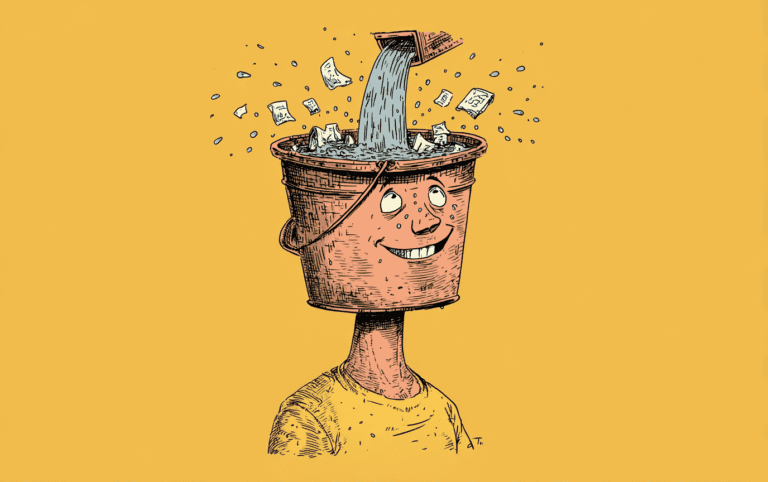
We’ve all heard the common truisms: knowledge is power, and ignorance is bliss.
On the surface, they seem like simple clichés. But if you sit with them for a moment, you realize they describe two entirely different ways of existing in the world. One offers comfort; the other offers agency.
- Hits: 5
- Details
- Written by: Kennuminati
- Category: Thus Spake Kennuminati
- Read Time: 5 mins
belief /bĭ-lēf′/
nounThe mental act, condition, or habit of placing trust or confidence in another. "My belief in you is as strong as ever."
Mental acceptance of and conviction in the truth, actuality, or validity of something. "His explanation of what happened defies belief."
Something believed or accepted as true, especially a particular tenet or a body of tenets accepted by a group of persons.
Assent to a proposition or affirmation, or the acceptance of a fact, opinion, or assertion as real or true, without immediate personal knowledge; reliance upon word or testimony; partial or full assurance without positive knowledge or absolute certainty; persuasion; conviction; confidence.-- The American Heritage® Dictionary of the English Language, 5th Edition
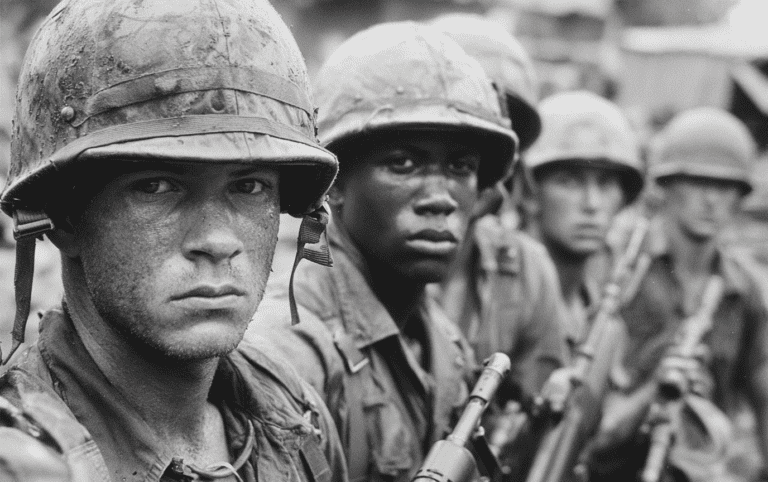
I have a difficult relationship with "belief." At its worst, I find it illogical; at its most extreme, I find it dangerous.
- Hits: 3
- Details
- Written by: Kennuminati
- Category: Thus Spake Kennuminati
- Read Time: 4 mins
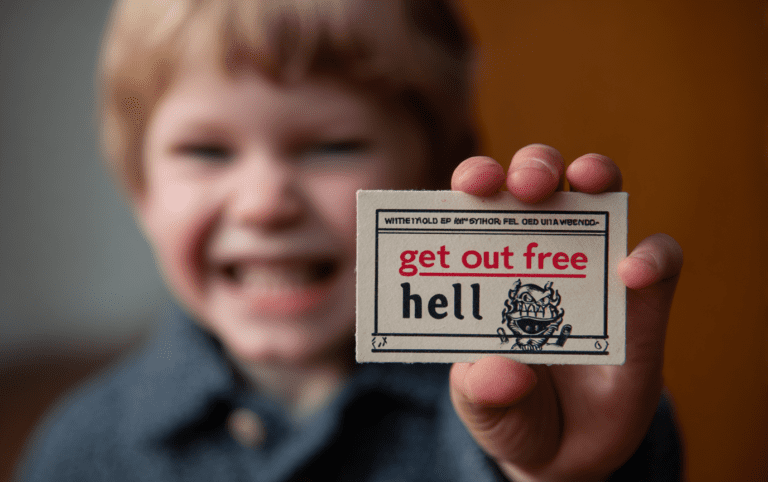
Picture a March morning in Vietnam. Temperatures range from 75°F to 93°F (24°C to 34°C) and this time of the year is mostly dry. It's the 16th of March, 1968, to be precise, and 24-year-old Second Lieutenant William L. Calley Jr. has only been in Vietnam for three months. Hailing from Miami, Florida, United States, the short, stocky college drop-out is preparing to lead about a hundred men from Charlie Company on a mission to find and kill Vietcong enemies.
Their destination was My Lai (pronounced mee LYE), an inland hamlet on the east coast of South Vietnam. They wouldn't encounter any Vietcong en route, but when they arrived at their destination they carried out atrocities that are reminiscent of reports of Nazi actions in World War II. By the time the day had ended, the soldiers had killed 504 people — all civilians. This included women, children, and elderly men.
- Hits: 2
- Details
- Written by: Kennuminati
- Category: Thus Spake Kennuminati
- Read Time: 7 mins
Note: I understand that abortion and one's religious beliefs (or the lack thereof) are deeply personal and sensitive issues. I'm just a nerd sharing my thoughts.
Periodically you've heard me reference a friend of mine who is a rather successful Southern Baptist pastor. In Trump's first term, I asked him if he had any insight into why people who purported to believe in Christian principles would vote for such a man. He answered with one word: "abortion."
- Hits: 8
- Details
- Written by: Kennuminati
- Category: Thus Spake Kennuminati
- Read Time: 5 mins
When I was a kid—think "the seventies"—we admired quite a few outlaws. Robin Hood was a favorite, as were the pirates we’d catch in black-and-white reruns when we were lucky enough to find them on our three TV channels. But being American, our greatest heroes came from the Old West, that wild stretch of history between 1850 and
1900.
It wasn't until I got older and dove into the history of that era that I became familiar with the lawmen. As a boy, the names I knew were Jesse and Frank James, Cole Younger, Billy the Kid, and Butch Cassidy and the Sundance Kid. I don’t know why—feel free to ask an anthropologist who studies kids raised in the seventies in the American South—but the point is, me an' the kids I grew up with loved outlaws.
- Hits: 5
- Details
- Written by: Kennuminati
- Category: Thus Spake Kennuminati
- Read Time: 5 mins
We live in unusual times. Anyone can post content that everyone can see without first checking the facts. Media outlets wantonly spread lies because it bolsters their ratings. Many politicians care more about preserving their positions of power than they do the truth.
Times such as these can make us angry, fill us with anxiety, and make us feel even more divided than ever before from our fellow earthlings.
As someone who has studied Buddhism for over a decade now, let me tell you how I deal with it: I sometimes get angry, anxious, and, yes, feel even more distant from those around me than ever before.
America may well be headed for "hell in a handbasket," but… we always were. No nation has ever lasted forever, and when you look at our history, it wasn't that long ago that African Americans couldn't use the same bathrooms as Caucasians. It wasn't that long ago that America was in a World War against a fascist regime. It wasn't that long ago that the American government tested dangerous chemicals on their own citizens.
Buddhism is a realistic philosophy; it doesn't offer empty promises but instead helps us deal with the reality of life as we know it. Here are some ways that Buddhists deal with times like these.
Impermanence
One of the core teachings of Buddhism is that of anicca, "impermanence." Nothing in our universe – including the universe itself – is permanent, and all things are in a constant state of change (including us).
When things are good for us, we want them to stay the same… but the reality is, they never have and they never will. Our lives will always be filled with highs and lows; we should live every moment of the better times and know that the difficult times will pass.
As someone who is also an entrepreneur in the tech field, "embrace change" is pretty familiar to me! When it's a shiny new techie thing, that's easier than when it's death and destruction and hunger and loss. Accepting that change is a constant and that it won't always be in our favor helps us be more prepared when the inevitable arises.
How We (don't) See Things
A couple of years ago, I read an interesting book about Buddhism and the human brain. It drove home a very interesting point. As products of evolution, our brains never had a need to tell us the truth; our brains needed to tell us what would help us survive.
Here's an analogy. "Thig" is a caveman. He's a tad scrawny and scares easily. When he walks through the forest (as cave-folk are required to do) he recoils in terror at every fallen branch he sees, fearing it is a venomous snake.
"Grog," the bravest and brawniest of his tribe, fears nothing. He tromps through the forest like he is invulnerable.
Guess who gets bitten by a snake and dies first? And who, of those two, lives to reproduce?
The brain that feared things that don't actually exist – like radical conspiracy theories – passes along its genes.
I don't wish to reduce such a thoroughly well-research book as Why Buddhism is True to the above, but for myself, accepting the fact that my brain was never made for truth – but instead for raw animal survival – was an important and life-altering realization. And it sets the stage for why humans are willing to believe the most outlandish theories if fear is the underlying motivation.
Lies, Damned Lies, and Politicians
These days, the truth has become irrelevant to many of the people in power in the United States, whether their power is political, popular, or economic. Power and profit are the primary motivations, but this is nothing new; human history is built upon such stories. If anything, the real lie here is that somehow it would be different now because of a particular political system or your vote for a given political party.
Fundamentally, humans haven't changed all that much for a few hundred thousand years. A scant 10,000 years ago, we were still tribal hunter-gatherers and had been for millennia. Our technological and societal achievements might make us think we've risen above our animalistic nature, but this is simply not true. One need only witness a mob in action to see how quickly we so-called "civilized" humans can revert to our most basic urges.
That those in power lie to stay in power shouldn't startle us; we should expect it. They're humans, too, subject to all of the weaknesses that come with the package.
Real Truth
A basic premise of Buddhism is that we live in a state of delusion, fostered by our most basic of working tools – our brains – which have no vested interest in us seeing reality as it is. Buddhists meditate for hours upon weeks upon years to try and penetrate the veil. Many Buddhists – myself included – think this effort spans many lifetimes as well.
This is a blog post, and for it to be of real value to anyone, it probably shouldn't take lifetimes to process. Instead, I encourage you to meditate on these two things:
Nothing is permanent. This thing that I call "I" is not permanent. This beautiful planet that I call home is not permanent. The sun that gives us warmth and light is not permanent. What does this mean to me, who can think these thoughts?
My brain is a biological entity, the product of millions of years of evolution, geared only toward keeping me alive long enough for me to breed and pass along my genetic material. It isn't here to tell me the truth, but there is a part of me that I can hear… if I'm quiet enough.
Between our biology and the world in which we live, real truth is the silent minority. It can still be found, though, if we're willing to look deeply enough within ourselves.
- Hits: 1