

- Details
- Written by: Kennuminati
- Category: Buddhism
- Read Time: 1 min
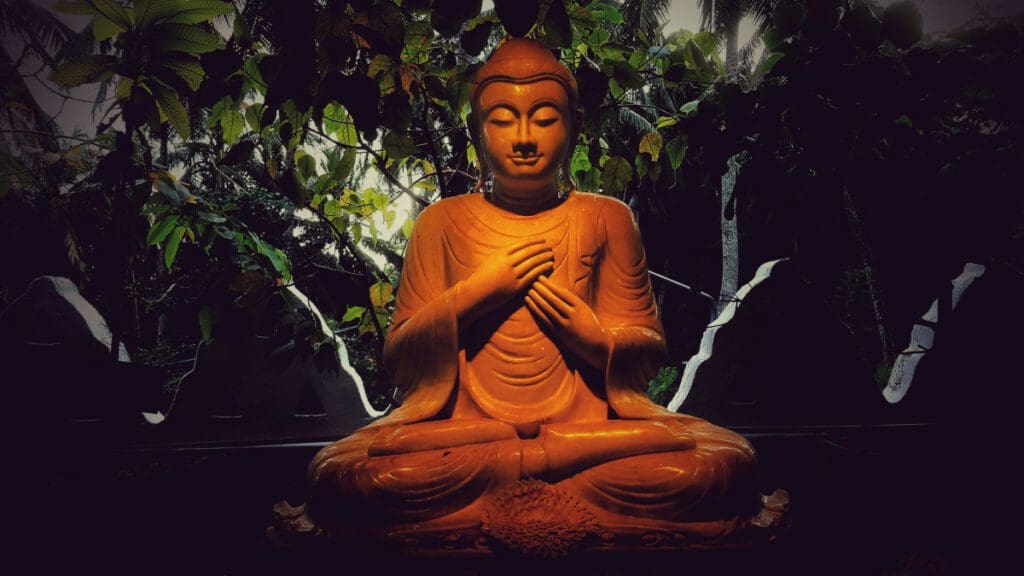
Gautama Buddha, also known as Siddhartha Gautama, Shakyamuni Buddha, or simply "the Buddha," was an enlightened human upon whose teachings the path of Buddhism was founded. He is believed to have lived and taught mostly in the eastern part of the Indian subcontinent some time between the sixth and fourth centuries BCE.
- Hits: 1
- Details
- Written by: Kennuminati
- Category: Buddhism
- Read Time: 2 mins
eth·ic
nouna set of moral principles, especially ones relating to or affirming a specified group, field, or form of conduct.
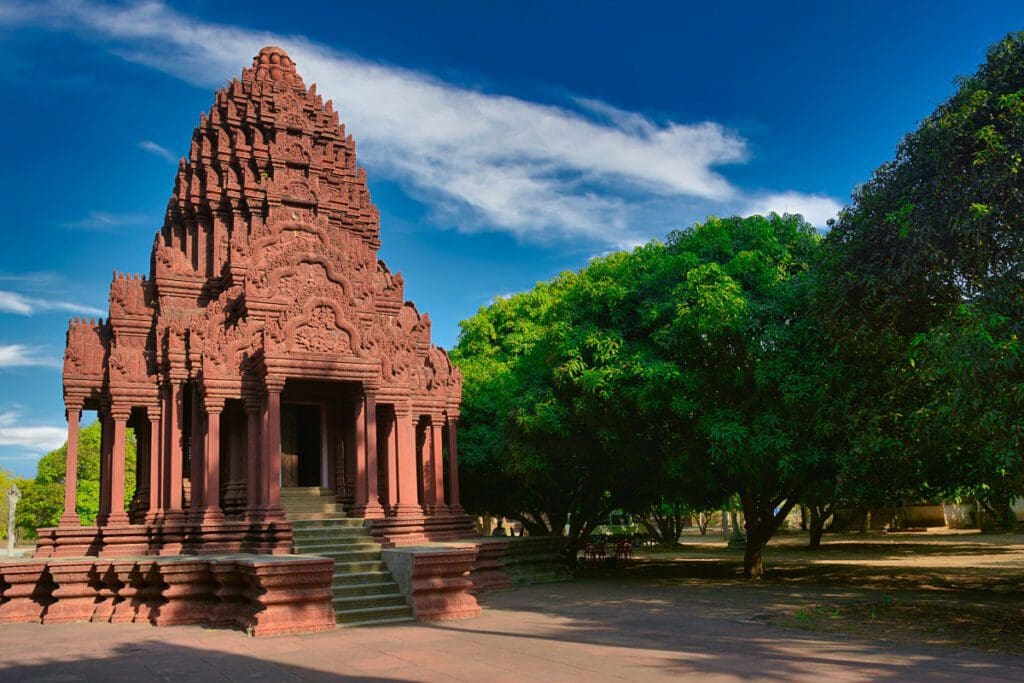
Within Buddhism, there are some basic ethical principles that adherents are encouraged to follow. The simplest is known as the Five Precepts:
- Hits: 3
- Details
- Written by: Kennuminati
- Category: Buddhism
- Read Time: 3 mins
phi-los-o-phy
noun: the study of ideas about knowledge, truth, the nature and meaning of life, etc.
: a particular set of ideas about knowledge, truth, the nature and meaning of life, etc.
: a set of ideas about how to do something or how to live
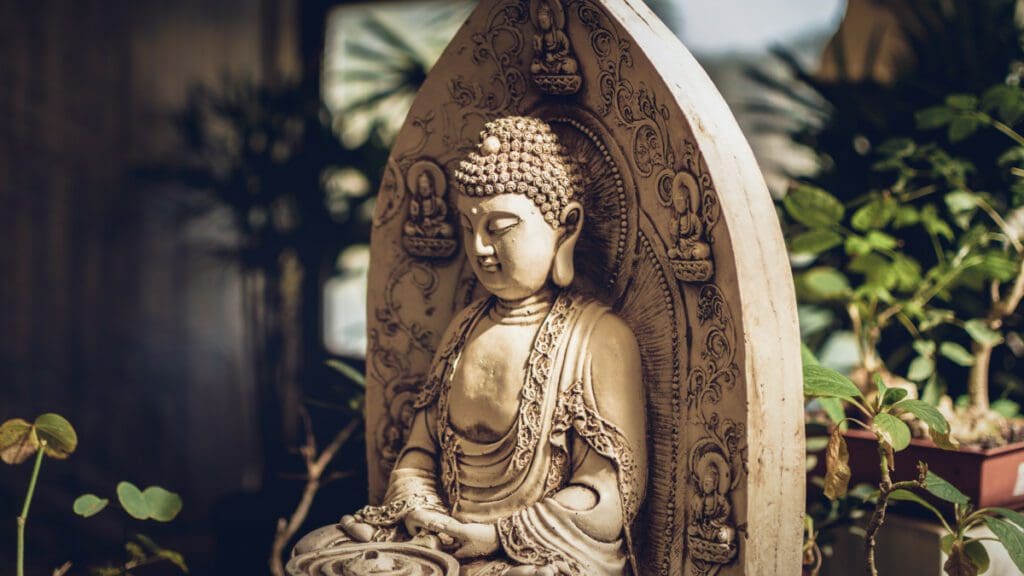
Without a doubt, Buddhism meets the definition of "philosophy" as stated above. The message of the historical Buddha, known as the Dharma, is very practically oriented toward the nature of life and what is truth vs. delusion.
- Hits: 1
- Details
- Written by: Kennuminati
- Category: Buddhism
- Read Time: 2 mins
re·li·gion
noun: the belief in a god or in a group of gods
: an organized system of beliefs, ceremonies, and rules used to worship a god or a group of gods
: an interest, a belief, or an activity that is very important to a person or group
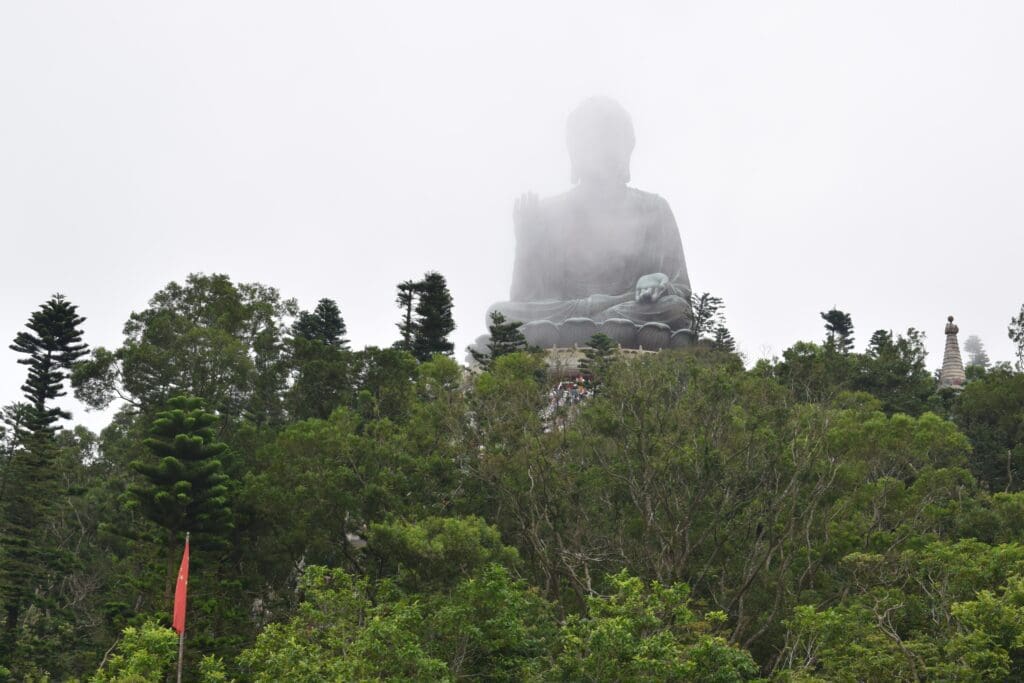
Buddhism is non-theistic, which is to say that there is no god or pantheon of gods directly associated with Buddhism. However, if you do a Google search on "Buddhist deities" you'll get plenty of evidence with which to argue against that statement. To understand this seeming contradiction, we need to look back on the early days of Buddhism.
- Hits: 3
- Details
- Written by: Kennuminati
- Category: Buddhism
- Read Time: 5 mins
Buddhism could best be thought of as a path to liberation; it is a method by which we can break free of delusion and ease the suffering inherent to the human condition.
Do you feel deluded? Probably not! But Buddhism says that we all operate under certain false beliefs. In order to get past those, Buddhism teaches three "Marks of Existence." They are:
Impermanence
We like for good things to hang around. A new relationship, full of excitement and energy, a project at work that seems "perfect," our youth, our health, etc. But everything – everything – changes… constantly. Even when it looks like everything today is the same as it was yesterday, it isn't; a million little changes have taken place inside of our bodies and in the world in which we live from one day to the next. When we accept this fact, not just as a thought but as something that we've fully integrated into our worldview, we have broken one element of the delusion.
Unsatisfactoriness
Nothing fully, completely satisfies us, ever. Bad things will come; good things will end. This might sound negative, but we Buddhists think of it as simply realistic. There will be good things and good times and we should enjoy them fully, but instead, we may find ourselves worrying about the loss of the good in our lives and fearing the onset of bad things. We crave that which we do not have and we cling to that which we do. But why crave that which will ultimately not bring us satisfaction? Why cling desperately to things that will ultimately leave us anyway, instead of treasuring the moments while we're in them? Clinging and craving lead to suffering, a concept that is dealt with in-depth in Buddhism.
Non-Self
This is perhaps the most difficult to accept of the three; it is the idea that there is no constant, perpetual, unchanging "you". Some religions teach the concept of a "soul," an eternal self; Buddhism disagrees with this. Imagine a rope, which is made up of hundreds of thousands of fibers, woven together but with no single strand reaching from one end of the rope to the other. Our moods, our thoughts, our feelings… these are the fibres, and one gives rise to another and then another, with the old thoughts or feelings dissipating as new ones arise.
Complicated much?!
In those three short paragraphs, there's a lot to take in! Notice, though, how the three "Marks" seem interrelated. We humans generally aren't big fans of change, but change is everywhere… including within ourselves. That leads to a lot of emotional discomforts, mostly because we operate as if we thought there was some way to stop the constant change. Religion sometimes gives people an "out," saying that even though our lives are bound up in constant change, we can go to an unchanging place ("heaven") and live in a state of ageless immortality and perpetual bliss. Buddhism accepts that there's no evidence for such and, in the absence of proof, maybe we'd better figure out how to handle these problems ourselves.
A Simple Solution
The centerpiece of Buddhist teachings is the doctrine of the Four Noble Truths. The first truth acknowledges the unsatisfactoriness that we've already touched upon, and the second truth explains why we experience it: because of our craving and clinging. The third truth says that we can achieve a deep, abiding peaceful state (nirvana) if we learn to stop our craving and clinging. Finally, the fourth truth tells us how to get there: the Eightfold Path.
The Eightfold Path is made up of three divisions: Wisdom, Virtue, and Meditation.
Wisdom comes from holding a 1) right view (the stuff above!) and 2) right resolve (a commitment to the path).
Virtue is made up of 3) right speech, 4) right action, and 5) right livelihood. These are presented as guidelines, not as absolute moral concepts; they serve to reduce conflict with others which would distract us from our path.
Meditation is comprised of 6) right effort, 7) right mindfulness, and 8) right concentration. The style of meditation generally associated with Theravada (the older, original school of Buddhism) is called Vipassana, and is often referred to as "mindfulness meditation."
Like the game of Chess, or playing the guitar, or a million other things we humans do, the basics of the Buddhist path are easy to learn but require time and dedication to master.
Nevertheless, it is in fact a practice, and applying it will enhance one's life. No faith required, just try it out for a while and see for yourself.
- Hits: 1